
When someone dies, people bring food to the family, so much food that no large tribe can eat all of it. When someone is ill, people organize food teams so that the caregivers don’t have to cook or do that modern hunter gatherer thing. Food is the universal comforter, a warm blanket of yumminess to wrap around your loss, grief, pain and worries.
But when you are a caregiver for someone with a long-term illness or disability, no one brings a casserole. When a disease or disability progresses over many years, it’s easy for people to forget that the caregiver is exhausted, overwhelmed, and so over cooking. As one of my fellow caregivers said, “Americans did great at times of crises, but not great at all in times of chronicity.” Well said, Anne; that nailed it for me. This phrase speaks to much about our country, too, but that’s for another blog, not this one.
Please realize that I’m not complaining here, just sharing my thoughts. No one has ever brought us a “casserole” but Brian’s work colleagues and my girlfriends have brought sandwiches and stayed to visit. Anne brought a wonderful pot of soup to us; we enjoyed it so much. A neighbor delivered a pizza to us; what a treat! Brian’s parents stay with him while I go to support group meetings and they always take care of lunch so I don’t have to do it.
Brian was diagnosed with Alzheimer’s disease in April 2012. I’ve been a full-time caregiver for him for three years now. He has lost the ability to even get a glass of water for himself so I do that. He can barely manipulate a spoon now. Can you imagine forgetting how to eat? Watching him eat an apple is a study in neurological jumping jacks. We eat a lot of gooey food, finger food and sandwiches. Soon we will progress to my feeding him; I do a bit of that now. Depending on how the disease progresses, I may have to puree his food. No problem, I’m prepared. It does take a lot of imagination to come up with meals to meet his needs. I’m a good cook but I can’t just whip up something and serve it without a total mess and frustration on his part. Give it a try sometime; it’s a challenge. When I have time to breathe again, I hope to put my experiences with feeding him in some kind of publication.
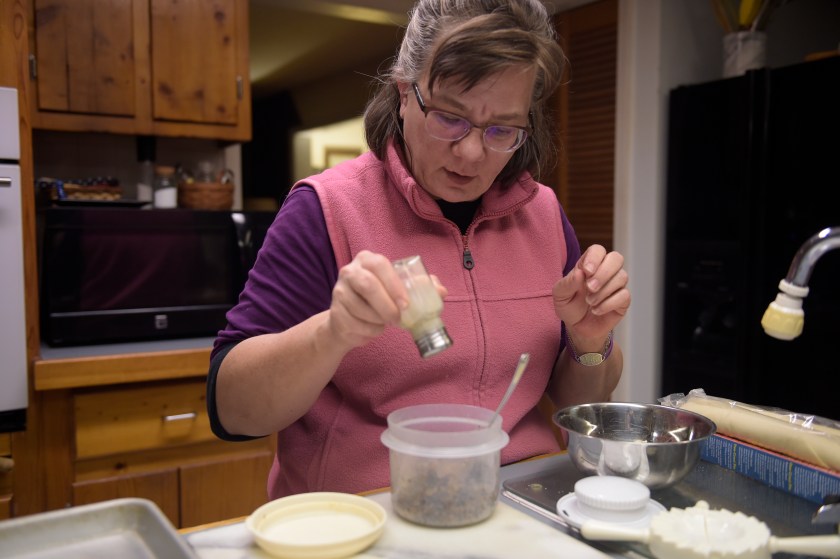
Photo – Kayla Wolfe
We used to go out to eat but that doesn’t happen anymore; it’s too difficult for him. When we could eat out, we ate at Angelo’s restaurant. They get it. They cut up his food before they served it and helped Brian retain his dignity. Now we order to-go.
Here’s my promise to myself. While I have delivered sandwiches to families on the same Alzheimer’s journey and stayed to visit, I’m basically housebound now. When I am able to get out again, I will deliver sandwiches and casseroles and soup and stay to visit if invited. I will do this for others who are on the same long journey to goodbye. I won’t do it for families who have lost a loved one…at least not immediately. I will wait for a month or two when those visits, cards, mail, and calls have stopped and then I’ll deliver that casserole or sandwich. I’ll stay to visit if invited. Because I know that grief or pain or caregiving do not end; it’s a part of our life. I want to share that warm blanket of yumminess, a hug, and a visit with someone who knows that I get it.
P.S. I can’t credit the person who came up with “No One Brings a Casserole” because I can’t remember where I read the article; when I Googled the title, I came up with lots of the same title and variations on the theme including “No One Brings a (Insert Food Here) When (You Are Suddenly Single) (Your Child/Husband/Wife is Struggling with Addiction) (Your Husband/Wife Abuses You and Is Arrested/Flees) (Your ____ Commits ____)”. Any woman over twenty will know what you mean when you say the title.

 Road to the Cottle Ranch